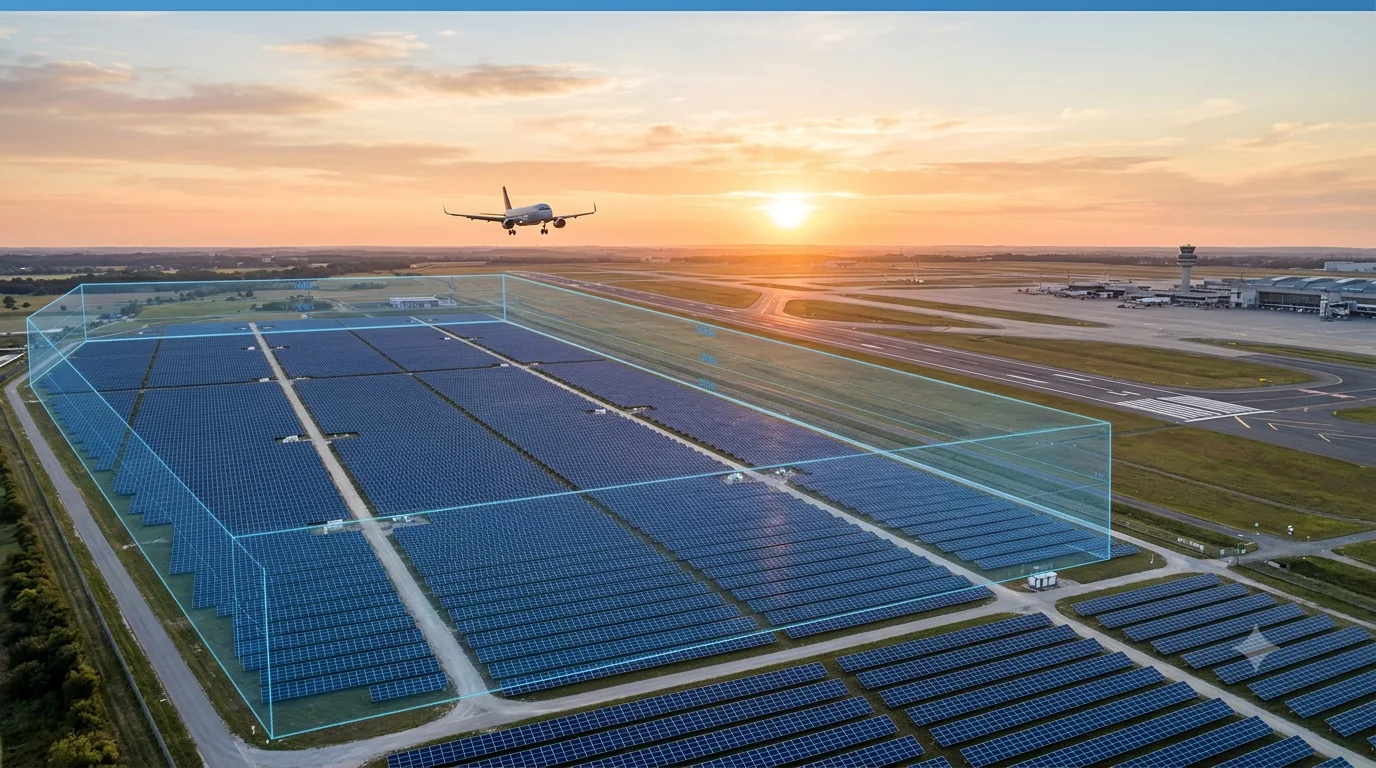
Solar panels need an AAI NOC only when the solar farm falls inside an airport’s safeguarding zone (up to 20 km from a VFR airport or up to 56 km from an IFR airport) and its highest point, such as tracker arrays, poles, inverter stations or evacuation towers, could cross the permitted height. Panels themselves are low, but height clearance is judged on the tallest element at the surveyed ground elevation, and glare near approach paths can also be reviewed. Our solar power project AAI NOC team supports the survey and NOCAS filing, backed by our Airport NOC survey services.
Solar Farm Height Clearance at a Glance
- Short answer: Not every solar farm needs an NOC. It depends on distance from an airport and the height of the tallest structure.
- Legal basis: GSR 751(E) of 2015, processed by the Airports Authority of India through NOCAS.
- Radius: Up to 20 km for VFR airports and up to 56 km for IFR airports, from the Aerodrome Reference Point.
- What is measured: Surveyed ground elevation (AMSL) plus the maximum height of every elevated component.
- Solar-specific issue: Glare and reflectivity near approach or departure paths can be looked at during review.
- Survey data: WGS-84 coordinates and AMSL elevation, mapped across the full site.
- Risk of skipping it: Redesign, project delay or demolition orders for obstructing structures.
Do Solar Panels Need an AAI NOC?
Solar installations are treated like any other structure under GSR 751(E). The notification protects the airspace around civil aerodromes, and it does not exempt a structure because it is “green” or low-profile. So the answer is a conditional yes:
- Yes, an NOC is needed if the project is inside an airport’s safeguarding radius and any part of it may exceed the permissible height for that location.
- Possibly auto-settled if the site is beyond the radius and the structures stay within the NOCAS height limit.
- Defence airfields follow a separate route. See defence and IAF height clearance NOC.
The key point is that AAI does not assess “panel height” in isolation. It checks the highest point in the layout against the Permissible Top Elevation (PTE) at your exact coordinates.
What Counts as Height in a Solar Plant?
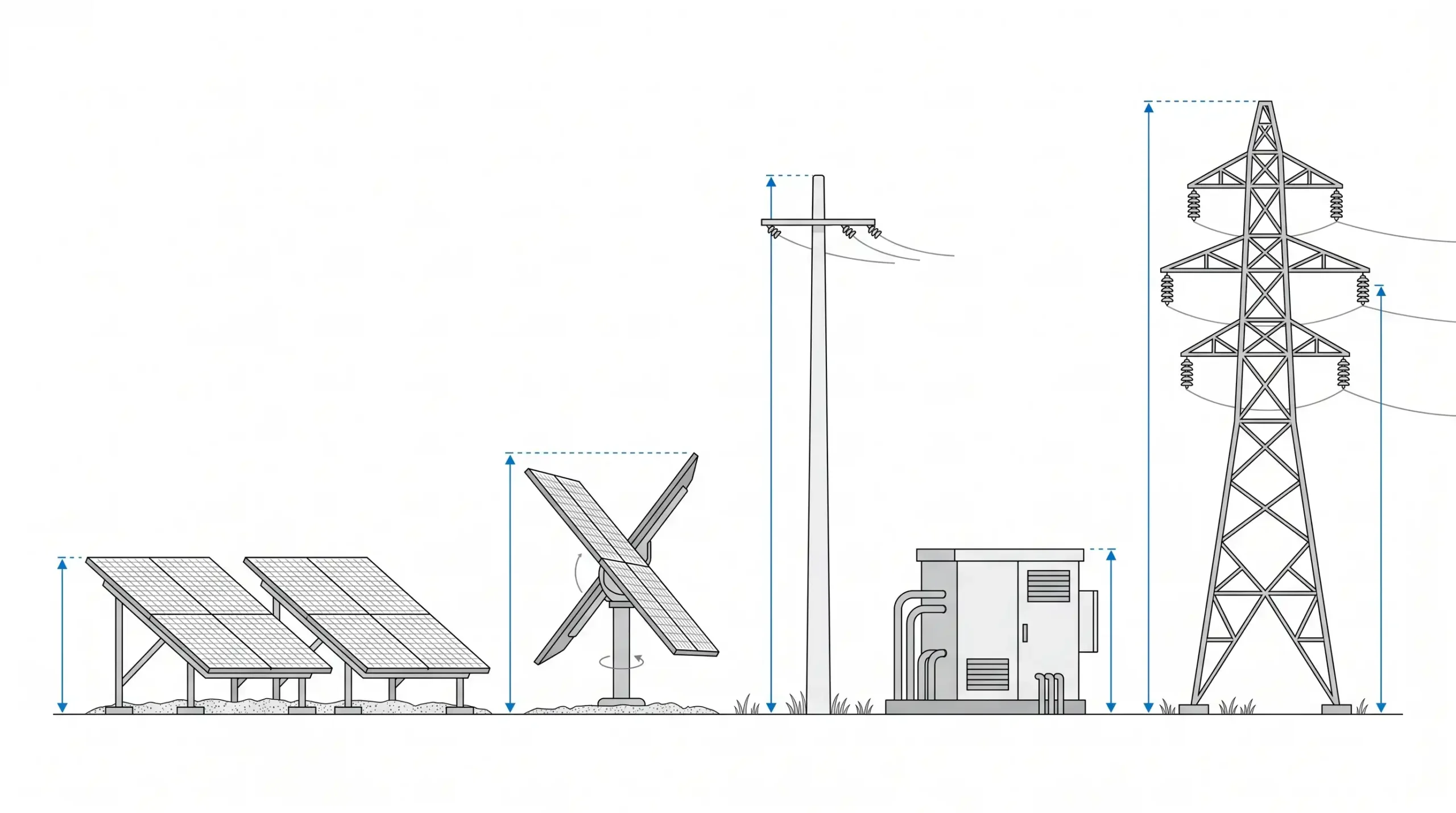
| Component | Why It Matters for Height |
|---|---|
| Fixed-tilt panel rows | Usually low, but the top edge of the highest row counts |
| Tracker arrays | Height at maximum tilt is higher than the resting height |
| Poles and lightning masts | Often the tallest points on the site |
| Inverter stations and control rooms | Includes any rooftop equipment or mast |
| Substation and switchyard | Gantries and structures add height |
| Evacuation and transmission towers | Can be much taller than the solar field itself |
| Agrivoltaic and elevated structures | Raised mounting increases height above ground |
| Cranes used during construction | Temporary equipment also needs clearance |
This is why a solar park that looks low from a distance can still hit the height limit through its poles, gantries or evacuation line. For the power line side, see our guide on transmission tower AAI NOC.
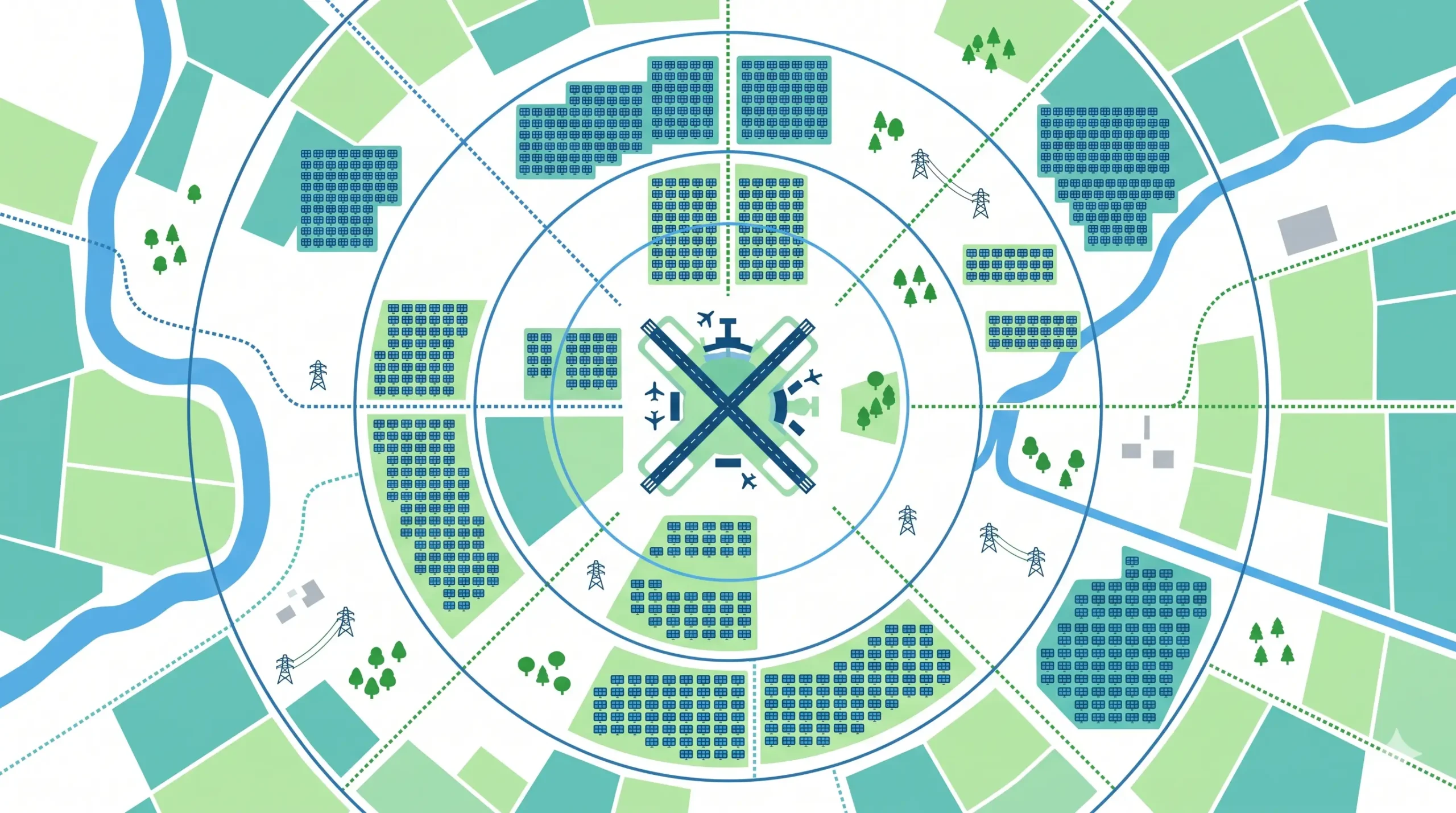
How the Airport Zone Decides Your Limit
 The zone depends on the type of airport. Read VFR vs IFR airport NOC distance zones for details:
 The zone depends on the type of airport. Read
- VFR airports: NOC radius up to 20 km.
- IFR airports: NOC radius up to 56 km.
- Inside the zone: Permitted height falls the closer you get to the runway, following the Obstacle Limitation Surface.
- Overlapping zones: The stricter limit governs.
For select cities, AAI publishes a Colour Coded Zoning Map. See what is CCZM and why it matters. Where it applies, the local body can approve heights within the PTE directly.
Why Large Plots Need Careful Elevation Data
A solar farm may cover tens or hundreds of acres, and ground elevation can vary across the plot. The NOC works on the formula: Maximum Structure Height = Permissible Top Elevation minus Site Elevation. A few metres of elevation difference between two corners of the site can change how much height is available at each location.
That is why large solar sites need survey data across the footprint, not one coordinate at the gate. Our site elevation survey for airport NOC uses RTK-GNSS and DGPS survey methods, and for sprawling sites drone aerial survey and contour survey help map the terrain quickly.
Is Glare a Concern for Solar Farms Near Airports?
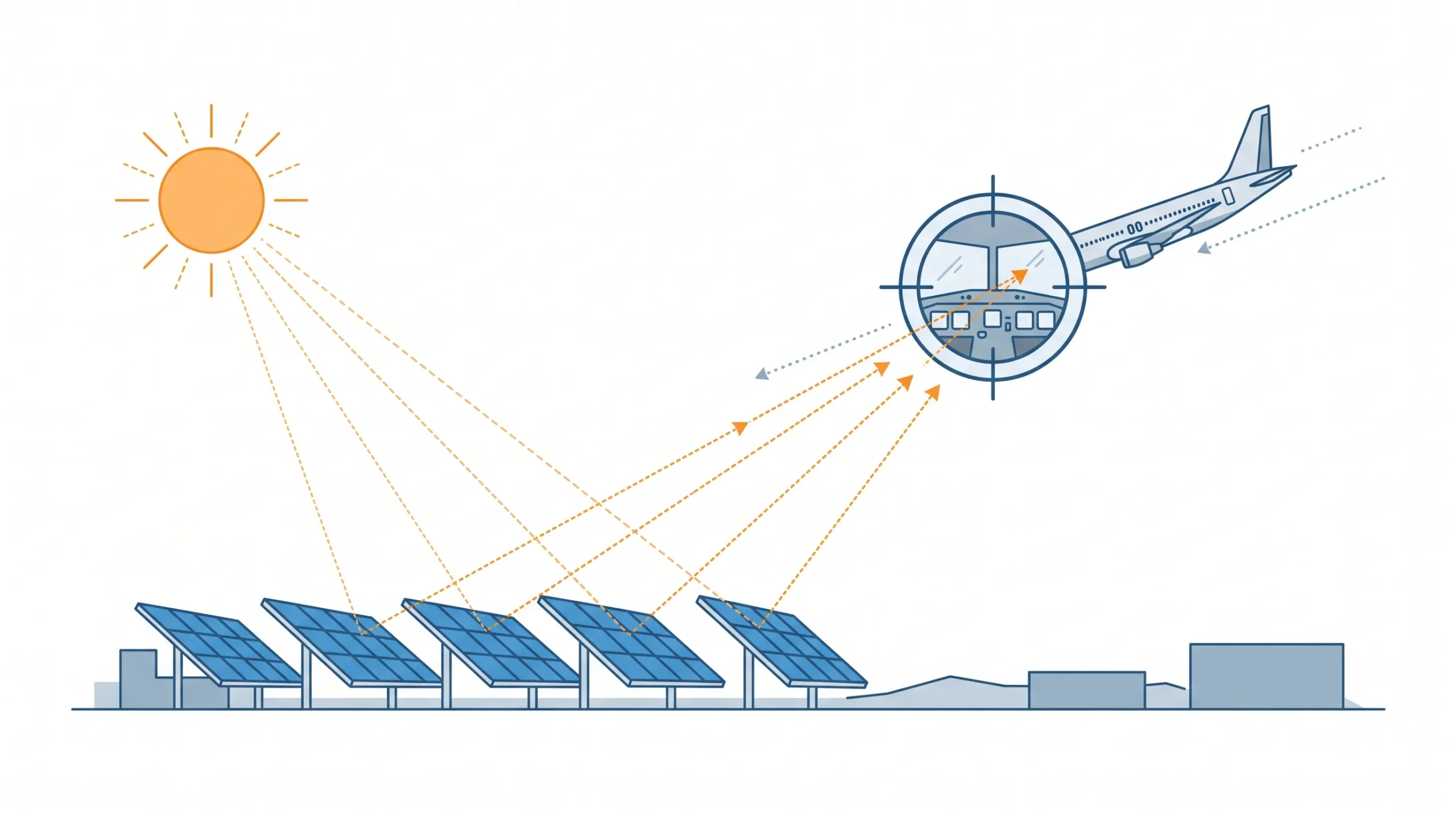
Yes, it can be. Solar panels use glass surfaces designed to absorb light, but they can still produce glint (a brief flash) or glare (a longer reflection) in certain sun angles. In the United States, the FAA’s interim policy on solar energy systems at airports explains the concern: reflected light could affect pilots or air traffic control. The National Renewable Energy Laboratory also publishes a technical guide on glint and glare for solar near airfields.
GSR 751(E) is mainly a height-safeguarding rule, so glare is not a separate numeric test in it. In practice, for larger plants close to runways and approach paths, airport safeguarding teams can still ask about panel orientation and reflectivity. Modern anti-reflective coatings reduce the risk, and an accurate layout and coordinates make it easier to answer any query.
Do Rooftop Solar Panels Need an AAI NOC?
A rooftop solar array adds to the height of the building. If the building is inside an airport zone, AAI looks at the building top plus panel and support height. Many small rooftop systems sit well within the limit, but tall buildings close to an airport can be tight. Check your zone first, and see our building height restriction near airports guide.
Floating Solar and Other Special Cases
- Floating solar: Reservoirs close to airports are still inside the zone. Panel height is low, but any poles, anchors or evacuation structures count.
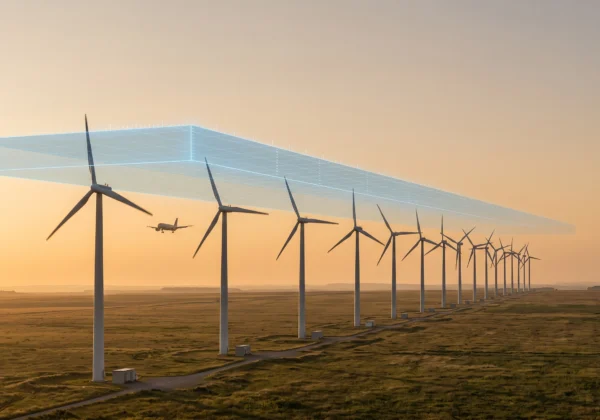
- Solar with wind: Hybrid plants combine solar and turbines, and turbines are far taller. See wind turbine and windmill AAI NOC.
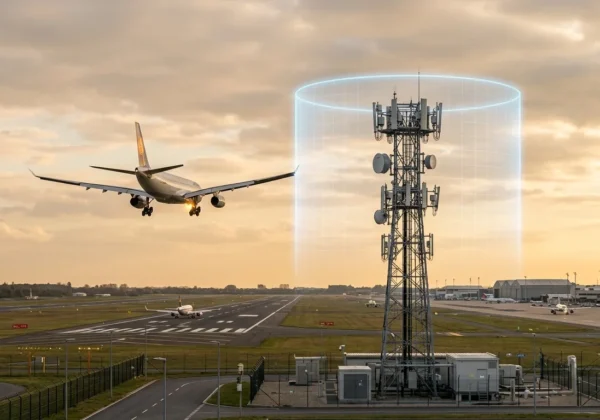
- Telecom masts at solar plants: Monitoring masts and tower structures need their own check. See mobile tower airport NOC rules.
How to Get an AAI NOC for a Solar Project: Step by Step
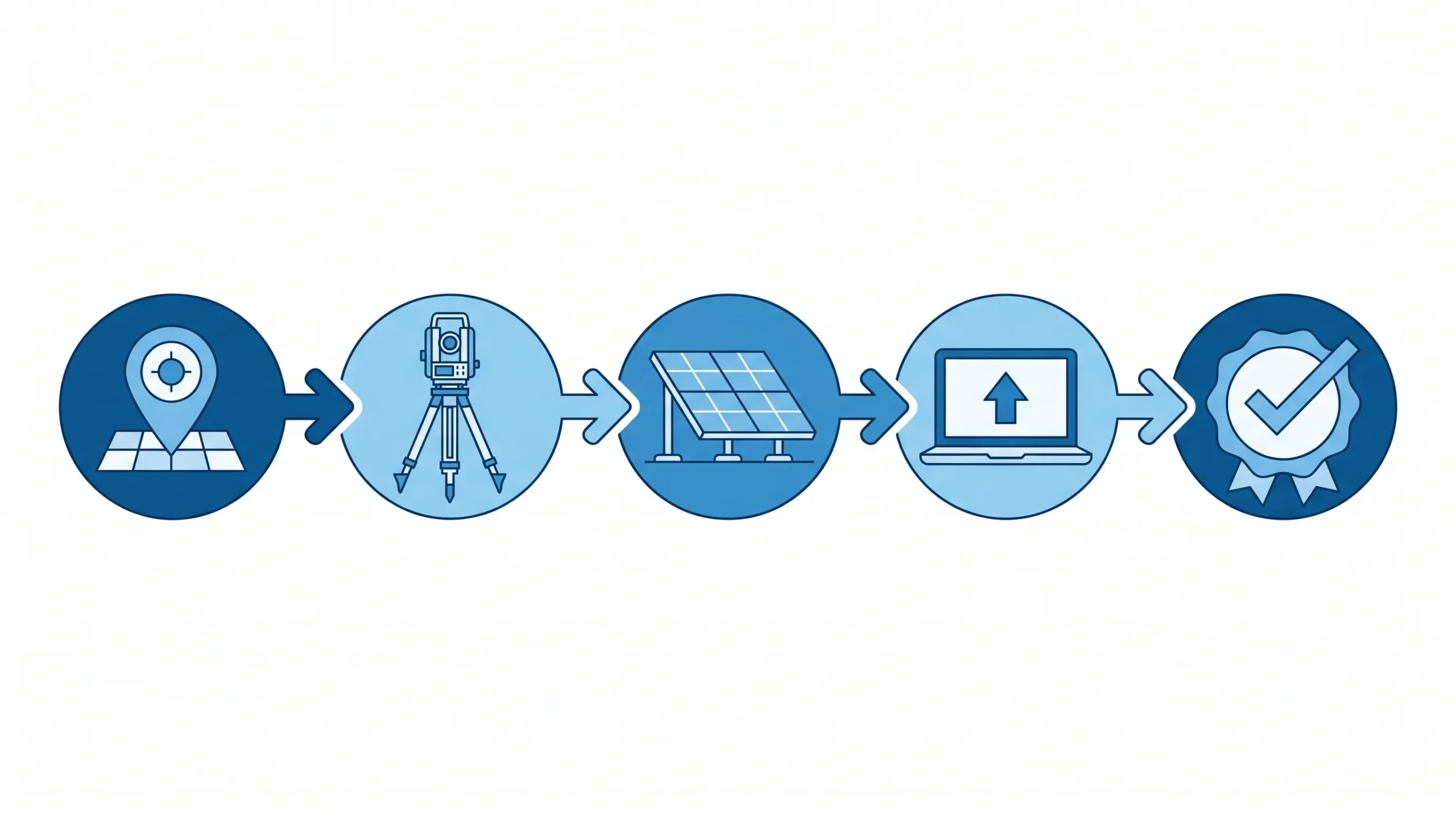
- Check the zone. Find the nearest airport, its VFR or IFR status and your distance from the ARP.
- Survey the site. Capture boundary coordinates (WGS-84) and ground elevation (AMSL) across the plot.
- List every elevated component. Include maximum tracker height, poles, inverter stations, substation and evacuation towers.
- Compare with the PTE. Check the maximum allowed height at each key location.
- Prepare documents. Use our documents required for airport height clearance NOC list and NOCAS application documentation guide.
- File on NOCAS. Follow the NOCAS portal application process on the official AAI NOCAS portal.
- Respond to queries. Answer clarifications on coordinates, height and layout quickly.
- Build only after the NOC. Follow all conditions in the issued certificate.
Documents Required for a Solar Power Plant AAI NOC
- Site boundary coordinates certificate (WGS-84)
- Site elevation certificate (AMSL) from an authorised surveyor
- Layout plan showing panel rows, poles and structures
- Maximum structure height details, including tracker tilt
- Single-line diagram of the solar plant
- Land ownership or lease documents
- Authorisation letter if a consultant or EPC files on behalf of the developer
- Photo ID, applicant details and fee payment confirmation
How Long Does a Solar Project AAI NOC Take?
AAI’s service charter allows up to 30 working days after submission. Field survey on a solar site can take a few days to a week depending on acreage, and documents may take a further week or two. Our AAI NOC approval timeline guide shows real-world data: clean applications often clear sooner, while queries, height issues or appeals add time. Start the survey early, before financial closure or grid connection deadlines.
Why Solar NOC Applications Get Rejected or Delayed
- Coordinates in the wrong datum or not matching the plot
- Elevation data from one point used for a large sloping plot
- Tracker height at maximum tilt or tall poles not declared
- Evacuation towers or substation structures missed
- Incomplete land or lease documents
- Unanswered NOCAS queries
See why airport NOC applications get rejected for the full list.
What Happens If You Build Without an NOC?
A state approval, PPA or local permit does not replace an AAI NOC, because they come from different authorities and test different things. Authorities can order height reduction or removal of obstructing structures. For a solar farm, late action can mean rework of the layout after equipment is already ordered. The GSR 751(E) guide covers the Aircraft (Demolition of Obstructions caused by Buildings and Trees) Rules, 2023. Lenders and state agencies may also ask for the NOC during financing or approvals.
AAI NOC vs DGCA for Solar Projects
You apply to AAI for height clearance through NOCAS. DGCA frames the rules, and it becomes relevant if you use drones for survey near an airport, which needs separate permission. Read AAI NOC vs DGCA clearance to avoid applying to the wrong office. For national solar policy, refer to the Ministry of New and Renewable Energy.
Airport NOC Survey Services Across India
Surveying India supports solar and other structure NOC surveys near airports in Jaipur, Kota, Ahmedabad, Bhopal, Lucknow, Chandigarh, Delhi NCR, Mumbai, Bengaluru, Nagpur, Indore, Varanasi, Patna, Raipur, Guwahati, Surat and Dholera.
Frequently Asked Questions
Do solar panels need an AAI NOC?
Only if the solar farm is inside an airport safeguarding zone and its tallest structure may exceed the permitted height. The radius is up to 20 km for VFR airports and up to 56 km for IFR airports.
Does a solar farm near an airport always need NOC?
Not always. Sites outside the zone and within the NOCAS height limit may be auto-settled. Sites inside the zone need a height check against the Permissible Top Elevation.
What height is checked for a solar plant NOC?
AAI checks the highest point in your layout, such as tracker height at maximum tilt, poles, inverter stations, substation gantries and evacuation towers, added to the surveyed ground elevation.
Is glare a factor in AAI NOC for solar projects?
It can be for large plants near runways or approach paths. GSR 751(E) is mainly a height rule, but airport teams can ask about panel orientation and reflectivity.
Do rooftop solar panels near an airport need an NOC?
If the building is inside an airport zone, AAI considers the building height plus the panel and support structure. Small rooftop systems often stay within limits, but tall buildings near airports should be checked.
Do floating solar plants need an AAI NOC?
Floating solar near airports is still subject to the zone rules. Panels are low, but poles, anchors and evacuation structures can count.
What documents are needed for a solar power plant AAI NOC?
You need boundary coordinates, a site elevation certificate, layout plan, maximum height details, single-line diagram, ownership or lease proof, an authorisation letter where relevant and fee payment proof.
How long does a solar project AAI NOC take?
AAI’s charter allows up to 30 working days. Survey and documentation add time before filing, and queries or height issues can extend it.
Where do I apply for a solar plant NOC?
Online through AAI’s NOCAS portal, with certified survey data, layout drawings and ownership documents.
Do evacuation transmission lines need a separate NOC?
Towers and structures in the evacuation line can need clearance if they fall within an airport zone or exceed NOCAS conditions, so include them in your planning.
Conclusion
The question is not whether solar panels need an AAI NOC, but whether your solar farm sits in an airport zone and how tall its highest structure is. Survey the whole site, list every elevated component, check the Permissible Top Elevation and file with accurate data. That approach protects your layout, your financing timeline and your project from avoidable rework.
Planning a solar project near an airport? Explore our solar power project AAI NOC service or contact our team for a feasibility check. You can also email info@surveyingindia.in.